
CES 2026 BOSS Award Winners
Updated: Mar 6
CES 2026 wasn’t just another stop on the global tech tour — it felt more like a full-scale preview of how brands will connect with audiences for the next decade. Beyond the headlines about AI, robotics, and next-gen hardware, the real story unfolded on the show floor itself, where experiences were carefully engineered to inform, immerse, and persuade. For exhibit and event professionals, CES has become less about spotting gadgets and more about decoding the strategies, spatial thinking, and storytelling techniques that will shape experiential marketing in the years ahead.
The Experiential Design Authority presented the 2026 BOSS (Best of Show Stand) Awards during a ceremony in Las Vegas, recognizing the best examples of experiential design on the CES 2026 show floor. This year’s awards celebrated the compelling, immersive, and human-centered brand experiences, highlighting the power of experiential design to create memorable moments and resonant narratives.
The annual BOSS Awards (Best of Show Stand Awards) honored 30 standout exhibits, ranked by a panel of 12 industry-leading designers, producers, and brand strategists.
The ten exhibits featured here claimed the top spots, earning Gold and Silver Awards for their ability to transform complex technology into compelling, human-centered brand experiences. Meanwhile, two special awards were presented: Honorable Mention was given to the exhibit that did not make the top 10 but received the highest number of first-place votes among fellow Bronze Award finalists, and the People’s Choice Award went to the exhibit that earned the most votes from fans, friends, and followers who visited the BOSS Awards voting portal on exhibitcitynews.com.
GOLD AWARD WINNERS

FIRST PLACE: Waymo
Design: NVE Experience Agency
Fabrication: DreamCraft
Installation: DreamCraft, N-Expo, Freeman
Assistance: USSI, Go Inspo, The Concourse Detail, Champion, Cognition, Mocean, Whalar
Sprawling across 7,000 square feet, the Waymo exhibit at CES 2026 felt less like a booth and more like a bold, kinetic brand statement — one engineered to stop traffic before it ever started. The visual hook was undeniable: a 600-pound Waymo vehicle seemingly floating in midair, paired with a massive rotating logo that functioned as both beacon and brand manifesto. Animated exterior graphics traced a Waymo car through stylized cityscapes, telegraphing growth, momentum, and inevitability. From the curb, the message was clear: autonomous mobility isn’t coming someday. It’s already here, and Waymo intends to lead it everywhere.
Inside, the experience unfolded as a carefully choreographed progression from fascination to fandom. Interactive touchpoints like the Waymo Map and The Waymo Driver translated complex AI and sensor technology into accessible, confidence-building narratives, while the immersive Watching Waymo Wall turned real-world driving scenarios into a theatrical, multi-sensory performance complete with fog, bubbles, and unexpected obstacles.
Celebrity-driven Fan-Dome Stories humanized the brand through authentic rider testimonials, and the cleverly simple “I Want Waymo” Button converted passive interest into measurable engagement. The emotional crescendo came with See Yourself in Waymo, where guests climbed into the backseat of a Jaguar I-PACE to generate a digital postcard from future markets — a final, persuasive reminder that the future Waymo was selling wasn’t abstract or speculative. It was personal, tangible, and already waiting at the curb.
Judges applauded Waymo’s exhibit as a standout favorite, with many returning multiple times to experience its high-impact engagement and exceptionally clear technology demonstrations. The booth was praised for its simple yet powerful narrative structure: a feature-plus-benefit approach that felt refreshingly effective and rare on the CES show floor. The open, road-inspired layout, suspended vehicle, and clean white architectural frame created a striking, fearless brand statement that felt both bold and approachable.
Judges also loved the informative teaching zones that explained how the AI navigates, the interactive badge feature that personalized updates by city, and the large-scale data visualizations that made complex systems easy to understand. Overall, the cohesive design, lighting, curved forms, and confident storytelling delivered what judges described as a proud, forward-looking, and spectacularly executed brand experience for Waymo.

SECOND PLACE: LG Electronics
Design: HS Ad Korea
Fabrication/Installation: Czarnowski
The 110-by-300-foot LG Electronics exhibit was heralded by judges as a meticulously choreographed brand environment — one where ambition met operational discipline. Brought to life in partnership with Czarnowski, the space demanded absolute precision, translating LG’s expansive vision for the future into a physical experience that felt immersive and confidently executed. From the moment guests crossed the threshold, they were guided through a layered narrative of large-scale visuals and spatial storytelling, designed to distill complex innovation into moments that felt intuitive, human, and unmistakably LG.
Behind the spectacle was a production effort defined by restraint as much as rigor. Every element, from structural systems to interactive touchpoints, was evaluated and optimized for efficiency and performance, allowing the creative intent to shine without friction. Interactive demonstrations and product-focused activations invited visitors to explore how LG’s technologies converge across home, work, and everyday life, while clear sightlines and deliberate pacing supported both discovery and dialogue. In an environment where the margin for error is razor-thin, the finished exhibit stood as a case study in executional excellence — polished, intentional, and engineered to make complexity look effortless.
Judges were unanimous in praising the exhibit’s ability to stop traffic, with massive crowds lining both sides of the aisle to capture photos and videos of the next-generation displays, including a remarkably thin 9mm screen. The dramatic entry sequence — anchored by floating screens — was repeatedly cited as a powerful first impression, setting the tone for what many judges described as a visually beautiful and emotionally engaging experience.
The media-clad architecture and transparent OLED installations blurred the line between digital art and physical space, while the Rube Goldberg–style wall stood out as a particularly clever and memorable fusion of storytelling and technology. Judges also highlighted the interactive AI-lifestyle zones, high-fidelity fabrication, and polished staff presence, reinforcing the sense that LG once again delivered an all-around impressive execution — from scale and design to content, integration, and unforgettable product demos.

THIRD PLACE: Doosan
Design: Oricom
Fabrication/Installation: D.Mods
Installation: Midas Convention Service Inc., Momentum
Assistance: Zoom, IO Plan, Technical Director Shin
Doosan arrived at CES 2026 with a clear strategic mandate: leverage its better-known Bobcat brand and assert itself as a global force in energy, robotics, and advanced infrastructure. The exhibit positioned Doosan not as a single-product manufacturer, but as an integrated technology company focused on building a more sustainable future. Through a tightly curated mix of live presentations and working demonstrations — spanning Bobcat equipment, AI-driven robotics, and next-generation data center technologies — the booth reframed Doosan’s identity for a global audience, shifting perception from “parent company” to “platform for innovation.”
The experience leaned heavily into credibility through performance. Interactive kiosks translated complex systems into accessible narratives, while the Doosan AI Robotics “Scan & Go” activation delivered both spectacle and substance, with the technology earning two CES Innovation Awards, including a Best of Innovation honor. Media attention followed, particularly around Doosan’s gas turbine technology, which emerged as a breakout topic and helped make the booth one of the most widely covered exhibits by both U.S. outlets and major Korean press. In classic CES fashion, the win wasn’t just visibility — it was validation, positioning Doosan as a brand no longer content to power progress behind the scenes, but ready to claim center stage.
Judges were impressed by the sheer scale and ambition of the exhibit, noting how effectively it showcased a wide range of products within a cohesive, future-forward environment. Many highlighted the strong design concept and sophisticated metallic-gray aesthetic, which unified multiple industrial sectors into a single, high-impact experience that felt both educational and inspiring.
The massive, well-distributed video walls and seamless transitions between different LED screens were praised for creating a classic yet modern showroom atmosphere that balanced large hardware displays with transparent, media-rich storytelling. Judges also pointed to the high level of attendee engagement and active conversations throughout the space, reinforcing the sense that the booth functioned not just as a display, but as a dynamic attraction — one that was impressive in scale, cleanly organized, and strongly aligned with the brand’s innovative image.

FOURTH PLACE: Brunswick Corp.
Design: Brunswick Corp.
Fabrication/Installation: Kubik
Assistance: Merged, Spirit Event Productions, CCR Solutions
Brunswick Corp. made a compelling case for why CES has become the company’s most strategic stage — not just for product launches, but for brand unification. Unlike traditional marine trade shows, where Brunswick’s portfolio of iconic brands typically stands apart, CES 2026 brought them together under a single, future-forward narrative. The debut of the Sea Ray SLX 360 marked the first time Brunswick had ever launched a boat at CES, instantly reframing the brand alongside the world’s most influential technology companies. Add in early buzz around Mercury Marine’s 808 Concept Engine and the award-winning Simrad AutoCaptain autonomous docking system, and the booth functioned as both a media magnet and a living proof point of Brunswick’s role as a serious technology innovator — not just a boat builder.
The guest experience leaned heavily into immersion, interaction, and aspiration. Visitors stepped into a literal on-water environment, greeted by a physical water feature before navigating hands-on simulators that let them captain virtual vessels, race Fliteboards, and explore advanced fishing and adventure boats equipped with solar power, live sonar, and autonomous navigation. The centerpiece Vision Theater — a massive 110-foot video wall — stitched these moments together into a cinematic brand story about how AI, automation, and integrated ecosystems are reshaping the future of recreation. Designed in part by Brunswick’s own Boating Intelligence Design Lab at the University of Illinois, the exhibit blurred the line between education and entertainment, ultimately delivering what few CES booths attempt: not just a showcase of innovation, but a fully realized lifestyle vision that made Las Vegas feel, if only briefly, like the open water.
Judges praised the booth for its immersive, story-driven approach, highlighting how the seamless blend of real-life boats, live water features, and high-tech simulators created a memorable and accessible way to experience the brand. Many appreciated the decision to reuse and reinterpret design elements from CES 2025, noting that this not only reinforced consistency and comfort in the brand identity, but also positioned sustainability as a creative asset rather than a limitation.
The arching entrance and grand architectural scale made a strong first impression, while interactive components and the dynamic digital back wall kept visitors engaged throughout. Judges also called the stand a “masterclass in immersive storytelling,” applauding the variety of hands-on demos and the thoughtful integration of physical and AV elements, which together made the exhibit feel unique, impactful, and highly effective.

FIFTH PLACE: Panasonic
Design: Panasonic, Czarnowski
Fabrication/Installation: Czarnowski
Assistance: Nomura, Fine Design, Flex Visual
CES 2026 became Panasonic’s platform to showcase its growing portfolio of business solutions, with particular emphasis on advanced energy-management and cooling technologies for data centers, AI-powered supply-chain optimization via Blue Yonder, and emerging green-energy innovations like perovskite solar cells. The narrative was clear and confidently stated: Panasonic is no longer just building products for homes. It’s engineering systems designed to reshape how businesses operate, consume energy, and move toward a more sustainable future.
The guest journey was tightly choreographed, beginning with a short immersive film that framed the experience before guests entered three clearly defined, content-rich zones. Each area offered hands-on demonstrations supported by tiered messaging, allowing visitors to self-select how deeply they wanted to engage while knowledgeable staff guided the conversation.
Even the physical environment reinforced the brand’s values, with large portions of the exhibit constructed from repurposed materials sourced from previous shows. In that way, the space didn’t just tell a sustainability story — it embodied it, proving that operational discipline and environmental responsibility can coexist with polished design, clear messaging, and a forward-looking brand vision.
Judges gave this exhibit high marks for its exceptionally clean, elegant execution and the ease with which visitors could absorb content. Judges also applauded the sophisticated blend of warm wood textures with high-fidelity digital displays, which successfully humanized the brand’s sustainability mission and delivered a premium experience that felt both technologically advanced and environmentally responsible. The immersive theater and closed-off layout added a sense of exclusivity, while the overall organization, lighting, and material palette reinforced a polished, high-end environment that was described as welcoming, memorable, and beautifully executed.
SILVER AWARD WINNERS

SIXTH PLACE: Oshkosh Corp.
Design/Fabrication: 3D Exhibits
Installation: 3D Exhibits, Nth Degree
Assistance: Sparks, Freeman, Morfa Studios
Oshkosh Corp. arrived at CES 2026 with a refreshingly pragmatic message: Innovation isn’t about distant futures — it’s about solving real problems, right now, for the people who keep the world running. Rather than leaning into speculative tech theater, Oshkosh positioned itself as a B2B innovation leader focused on near-term, human-centered solutions across job sites, airports, and neighborhoods. The strategy emphasized autonomy, AI, connectivity, and electrification not as abstract concepts, but as integrated tools already improving safety, productivity, and resilience in high-stakes environments. The result was an attendee-first experience that clearly communicated not just what Oshkosh is building, but why it matters.
The physical design reinforced that narrative through a bold dual-entry tunnel concept that guided visitors through a connected ecosystem of immersive storytelling and live demonstrations. Inside an IMAX-style theater, guests experienced “The Perfect Turn,” a cinematic airport scenario showing how autonomous ground equipment and robotics coordinate through iOPS technology. With layered LED arches, hands-on demos, and a dwell time exceeding nine minutes across more than 17,000 visitors, the booth delivered something rare at CES: a cohesive, emotionally resonant experience that proved advanced technology doesn’t replace human work — it amplifies it.
Judges called the massive white canopy and bold overhead LED execution — extending from ceiling to floor in an L-shaped gesture — a strong architectural statement that framed the heavy-duty electric vehicles. They also applauded the balanced use of LED walls in multiple formats, the immersive theater, and the wide range of interactive learning zones that brought evolving technologies to life. Storytelling was repeatedly cited as a major strength, supported by clear, well-branded messaging and high-quality fabrication, resulting in what one judge called “a standout experience and top contender.” Not surprisingly, the booth also impressed fans, friends, and followers, earning more than 1,200 votes and this year’s People’s Choice Award.

SEVENTH PLACE: Roborock
Design/Fabrication/Installation: Eidetic Marketing
Roborock’s exhibit embodied the swagger of a brand determined to outgrow its category. Framed around the theme “The Greatest Meeting the Greatest,” the space positioned Roborock as an innovation-driven technology company — one aligned with the performance, ambition, and global appeal of Real Madrid. The bold red-and-black palette, LED content, and youthful energy set the tone immediately, while the message was reinforced through proof, not promises. Flagship launches like the Saros Rover, the industry’s first wheel-leg robotic vacuum, transformed complex engineering into visceral spectacle, with live stair-climbing demonstrations turning a technical capability into a must-see performance. In classic CES fashion, Roborock didn’t just tell visitors it was different — it showed them.
The experience leaned unapologetically into participation. Guests tested robotic lawnmowers on winding outdoor tracks, competed in soccer-themed challenges tied to the Real Madrid partnership, and explored smart app-control and industrial design zones that revealed the thinking behind the products. Surprise flash-mob dance performances periodically converted the booth into a live event, drawing crowds and fueling social sharing. More than 8,100 visitors passed through the space, with the majority engaging hands-on — a rare conversion rate in a show full of passive demos. The results spoke for themselves: billions of media impressions, dozens of Best of CES awards, and Saros Rover emerging as a breakout star. More importantly, the exhibit succeeded in reframing Roborock’s brand narrative — from functional cleaning tech to a high-performance, lifestyle-driven robotics brand built on energy, excellence, and experiential proof.
Judges praised the booth for its engaging, traffic-stopping demos that showcased the brand’s robotics and AI technology in a highly tangible way. Many highlighted the sleek, edgy tech aesthetic, noting how the restrained palette and coordinated LED screens created a visually cohesive environment that cut through the chaos of the show floor. The seamless integration of live product demonstrations with performances was singled out as a fresh, attention-grabbing approach that brought energy and human interaction to the experience. Judges also appreciated the “cleaning lab” concept, which effectively simulated real-world home environments to highlight the precision, versatility, and innovative features of the vacuums and mowers. Overall, the exhibit was praised as practical, immersive, and highly effective at making visitors stop, watch, and engage.

EIGHTH PLACE: Clarios
Design: Iris North America, Vok Dams
Fabrication/Installation: DreamCraft
Assistance: 10Group, Unknown
The 30-by-50-foot exhibit from Clarios set out to make the invisible visible — and in doing so, quietly redefined how energy itself is perceived. Framed around the theme “Experience the Grid,” the space introduced visitors to the Clarios Power Management System (CPMS), positioning the company as a strategic technology partner shaping the future of smart mobility, AI data centers, and robotics. Through a vibrant architecture of light and motion, the exhibit transformed low-voltage power into a living system — one that connects energy, data, and intelligence into a single, cohesive narrative about how the world moves forward.
An emotional and visual centerpiece was the Battery Monolith, an interactive power source that literally fueled the booth’s dynamic lighting environment. Surrounded by transparent screens and layered LED surfaces, guests could physically touch the monolith to trigger a choreographed light show visualizing CPMS across five pillars: Generate, Convert, Distribute, Stabilize, and Monitor. Anchoring the experience was a Lamborghini Huracán Sterrato wrapped in custom artwork by J.DEMSKY — a poetic interpretation of energy as a constantly flowing, unseen force. With more than 4,000 feet of LED strips, the exhibit delivered a rare balance of technical credibility and artistic restraint — proving that even the most complex infrastructure stories can be told through emotion, interaction, and beautifully orchestrated design.
Judges were impressed by the booth’s striking visual identity, calling it “super cool” and a definite show-floor eye catcher. Many highlighted the sleek, TRON-inspired aesthetic, noting how the vibrant colors, glossy black surfaces, and thoughtfully integrated lighting created a clean, welcoming environment that invited exploration. The overhead motion LEDs and Battery Monolith installation were praised as dynamic, functional design elements that brought the theme of energy to life and drew attention to the exhibit’s core story.

NINTH PLACE: TCL Corp.
At Booth 18604, TCL aspired to turn cutting-edge display technology into a full sensory experience. As the world’s No. 1 Mini LED and ultra-large TV brand, TCL transformed its space into a showcase of visual mastery, highlighting a broad spectrum of display panels across sizes, form factors, and applications. Central to the exhibit was SQD-Mini LED technology, boasting higher brightness, expanded local dimming zones, ultra-slim form factors, and an All-Scene Wide Color Gamut that eliminates color crosstalk. Visitors were invited to experience TCL’s latest NXTPAPER eye-care smartphones, enote tablets, and AR glasses — devices that collectively demonstrated the company’s ability to translate advanced display science into everyday products that elevate both work and play.
Beyond screens, the TCL booth made AI tangible. Attendees explored a full portfolio of AI-powered smart home devices — from air conditioners and refrigerators to smart locks — as well as immersive entertainment experiences on AI-enhanced TVs, AR glasses, and projectors. Mobility and productivity innovations were also on display, showing how TCL’s AI ecosystem seamlessly connects “Human-Vehicle-Home environments,” bridging business, leisure, and daily life. The experience was designed as both educational and aspirational: guests left with a clear understanding of how TCL’s displays, devices, and AI solutions combine to shape the next chapter of intelligent living, reinforcing the brand’s leadership across both performance and innovation.
Judges praised the exhibit’s ambitious, future-facing vision, with one pointing to the AI-driven smart-living zones as “a wonderful window to the future.” Many judges highlighted the booth’s modern yet comfortable atmosphere, noting how a wide range of content — from immersive smart-home experiences to the playful AiMeLand activation — came together as a largely coherent whole. Judges also appreciated the energetic presence of gamers and interactive activations, which brought life to the space and encouraged exploration.

TENTH PLACE: John Deere
Design/Fabrication/Installation: MC²
Assistance: Racepoint Global, NMR, WonderMakr, C2C Visuals
John Deere brought a refreshingly grounded vision of automation to life — one rooted in the real-world challenges farmers and roadbuilders face every day. From the moment visitors approached, the space communicated purpose and precision: an LED floor simulated half-speed movement through a field, complemented by real corn stalks that anchored the experience in familiar agricultural cues. A towering LED wall extended the narrative, illustrating how John Deere’s automation transforms machine movement into reliable, repeatable results. Every design choice reinforced the message that Deere isn’t automating for spectacle; it’s automating to empower, enabling operators to deliver food, fuel, and infrastructure with speed, consistency, and precision.
The guest journey was both participatory and instructive. Attendees could step into the simulated field, experiencing first-hand how automated systems compare with manual operation, while immersive displays demonstrated the versatility of Deere technology across road paving and construction applications. By combining physical props, interactive LED environments, and clear storytelling, the booth allowed visitors to see, feel, and understand the intelligence behind John Deere’s machines. The result was an experience that went beyond static demos — it connected people to the brand’s mission, translating complex automation into tangible benefits that matter in the fields, on job sites, and for the global economy alike.
Judges highlighted the sheer scale of the agricultural machinery as the booth’s defining feature, with one calling it a “powerful centerpiece that instantly communicated the brand’s authority in the category” and creating what another judge described as “a clear, confident, and authentic expression of John Deere.” Judges also praised the clever storytelling touches — from the floor-integrated LEDs to the whimsical “hats sold out” sign — and singled out the digital corn field in mid-harvest as a standout execution.
BRONZE AWARD WINNERS

HONORABLE MENTION: Caterpillar Inc.
Design: Outerkind
Fabrication/Installation: MC²
Caterpillar’s exhibit was a fully immersive environment where the familiar yellow of the brand met layered blue digital tones, signaling both heritage and transformation. From a museum-style gallery of authentic autonomy artifacts to an interactive map of global autonomous job sites, the booth conveyed leadership grounded in decades of operational experience.
The guest journey balanced spectacle with substance. A centrally located theater ran every 15 minutes, guiding audiences through live-to-tape job-site footage and highlighting how AI and autonomy operate in situ. The hero machine moment — a battery-electric prototype excavator — demonstrated motion, voice interaction, and AI-enabled safety features, while quieter AI assistant pods offered personalized, technical deep dives. The exhibit told a cohesive, authentic story of a 100-year-old company transforming in real time — proving that Caterpillar’s future is not just imagined, it’s already at work.
According to one judge, this was “an impressive design recalling the strength of Caterpillar’s products.” Another called it “a powerful architectural statement that successfully rebranded a legacy maker of heavy machinery into a tech-industry leader.”
Caterpillar found itself in a five-way tie for this year’s Honorable Mention, which is given to the finalist with the most first-place votes from judges once the Top 10 winners are removed from the equation. That deadlock — ultimately decided by a tie-breaking vote from The Experiential Design Authority’s Executive Director. Other finalists tied for the honor included Insulet, KEPCO, Mammotion, and Siemens. While all five are exceptional examples of experiential design in action, Caterpillar stood out for its range of engagement tactics, magnetic exterior, and immersive design, offering multiple sparks of inspiration for any exhibitor looking to adopt and adapt successful techniques into future stands.

11th Place: Insulet
Design: Havas
Fabrication/Installation: Creative Solutions Group

12th Place: Siemens
Design: Sparks
Fabrication: Sparks, Freeman
Assistance: Freeman AV

13th Place: Korean Electric Power Corp. (KEPCO)
Design: KEPCO
Fabrication: Rish Iyagi
Installation: 5 Points Exhibits
Assistance: Dellang

14th Place: Agetech Collective from AARP
Design: AARP Brand Creative Services, MC²
Fabrication/Installation: MC²
Assistance: NMR
15th Place: Caterpillar Inc.
Design: Outerkind
Fabrication/Installation: MC²

16th Place: Neura Robotics
Design: Jangled Nerves
Fabrication: Display International Schwendinger

17th Place: Yuwell
Design/Fabrication: Shenzhen Forms Design Co.

18th Place: Sony Honda Mobility (Afeela)
Design: Sony Honda Mobility
Fabrication/Installation: Pinnacle
Assistance: Available Light, Stamm Media, Stungun Productions

19th Place: Mammotion Technology
Design/Fabrication/Installation: Together Act Marketing

20th Place: Bosch
Design: Made O.K., Oberheizinger
Fabrication: Metron Eging
Installation: Willwork, Freeman, Metron Eging
Assistance: Blackspace, Serviceplan, ICT
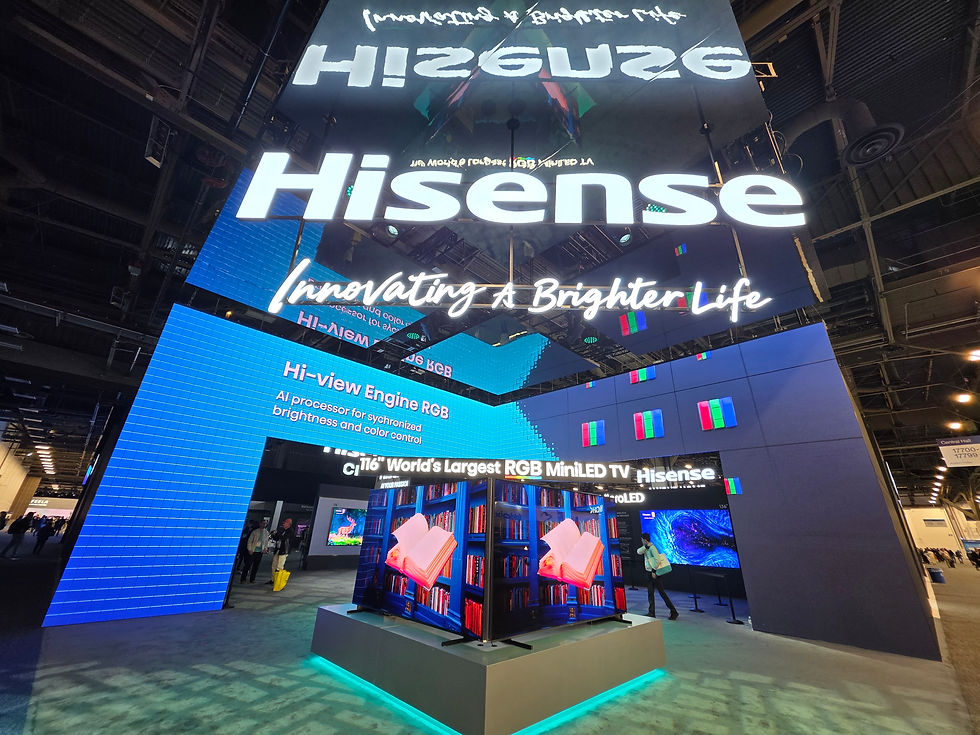
21st Place: Hisense
Design: Hisense Industrial Design Center, Uniplan
Fabrication: Astound Group, H Brothers
Installation: Nth Degree, Freeman

22nd Place: Navee
Design/Fabrication: Expo-One

23rd Place: Hyundai Motor Group
Installation: ENK

24th Place: Ceragem
Design: Daehong
Fabrication: BizMarComm
Installation: ENK
Assistance: DammDamm Samuso, Henx Creative

25th Place: Abbott
Design: Factory 360
Fabrication: Catalyst Exhibits
Installation: Catalyst Exhibits, TRU Service Group
Assistance: Octave Audio Visual

26th Place: Dreame Innovation Technology
Design/Fabrication/Installation: NQ Expo, Zenith Cultech

27th Place: Echo Water
Design: Echo Water
Fabrication/Installation: LV Exhibit Rentals

28th Place: Segway
Design: Segway, Topbridge
Fabrication/Installation: Topbridge

29th Place: Changhong

30th Place: Geely Auto Group
Design/Fabrication: Encore
For more information about the BOSS Awards, visit www.experientialdesignauthority.com/best-of-show
CES gibi büyük teknoloji etkinliklerinde görsel sunum ve sahne deneyimi markanın algısını doğrudan etkiliyor. Net ekranlar, iyi ışık ve düzenli alan planı ürünleri daha güçlü gösterir. İyi planlanmış bir LED ekran kiralama çözümü, teknoloji lansmanları ve fuar etkinliklerinde daha modern ve dikkat çekici bir görünüm sağlayabilir.